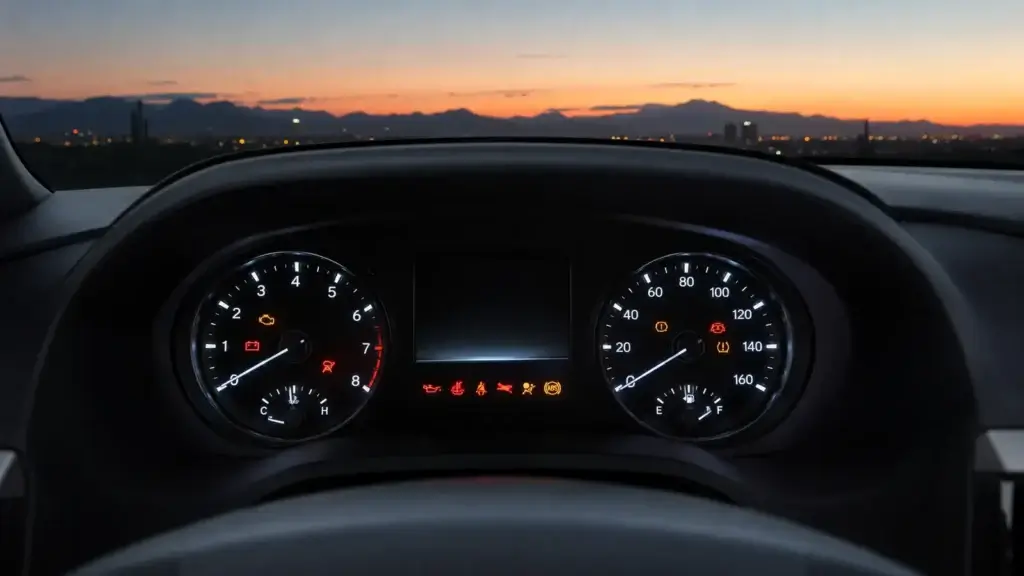
If a warning light appears and the vehicle suddenly loses power, overheats, changes brake feel, makes a new mechanical noise, or produces smoke, move to a safe location. The change in the vehicle matters as much as the symbol on the dashboard.
Take a photo before shutting the car off. It preserves the exact symbol and any message displayed with it. Then check the owner’s manual for that vehicle. Manufacturers do not use every symbol in exactly the same way.
Three red warnings that can justify shutting down
Oil pressure: If the oil-pressure warning remains on while the engine is running, pull over safely and turn the engine off. A correct oil level does not prove the engine has adequate pressure. Continuing to run it can cause severe internal damage.
Engine temperature: A temperature warning or gauge in the hot zone calls for a safe stop. Turn the engine off and allow it to cool. Never remove a pressurized cooling-system cap while it is hot.
Brake system: A red brake warning needs immediate attention when it appears with a low or soft pedal, reduced braking, pulling, or visible fluid loss. Do not drive the vehicle to test whether the pedal improves. Arrange a tow.
The battery symbol does not automatically mean battery
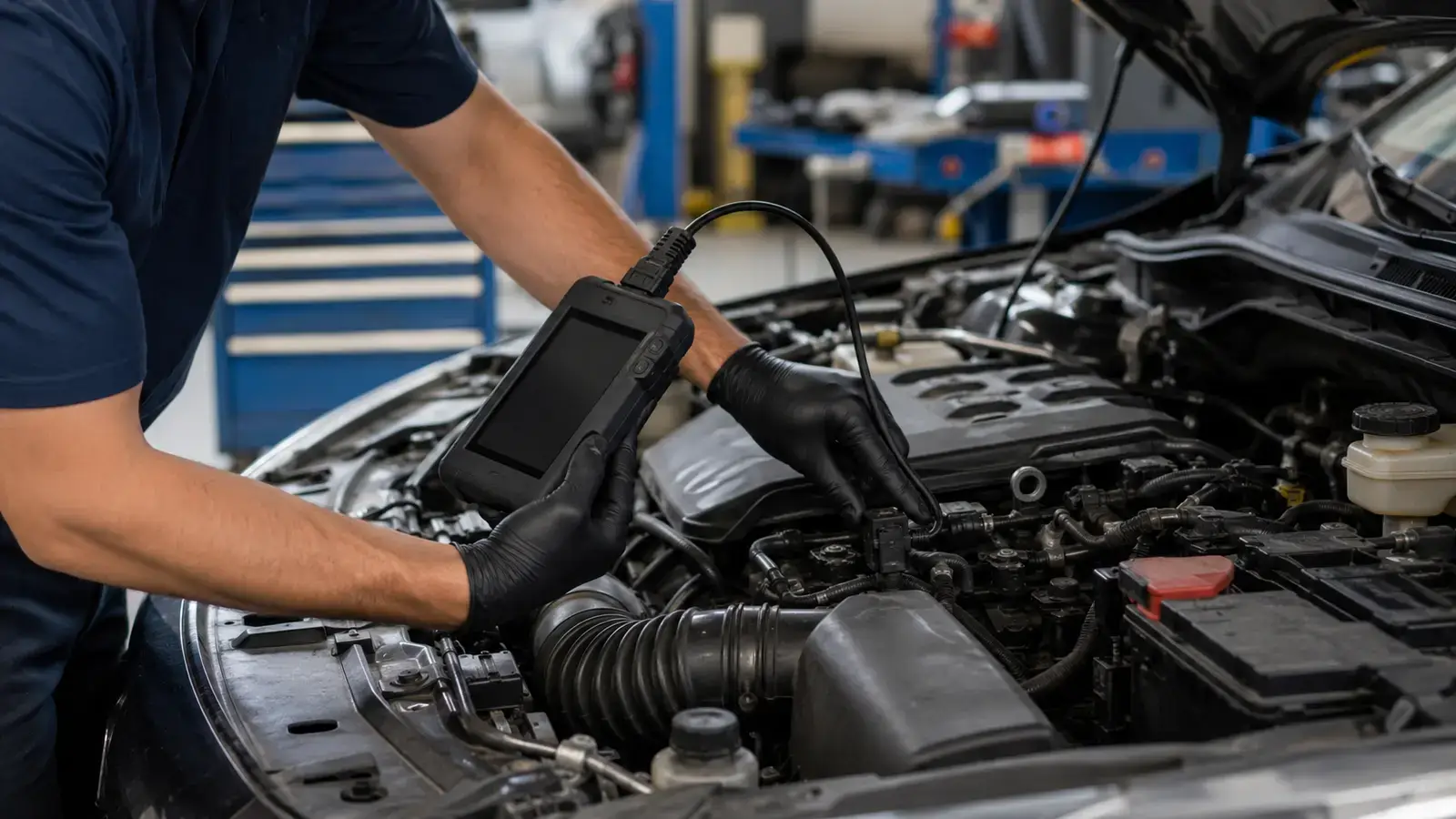
The charging warning usually means the electrical system is no longer being supplied normally. The cause may be the alternator, belt drive, wiring, a connection, or another fault. The vehicle may continue only until stored battery energy is exhausted. Switch off unnecessary electrical loads and get somewhere safe rather than buying a battery based on the symbol alone.
Flashing and steady check-engine lights are different
A flashing check-engine light commonly accompanies an active misfire that can overheat the catalytic converter. Reduce engine load and stop safely. If the engine is shaking, lacks power, or smells unusual, have it towed.
A steady light usually allows more time, but it still needs diagnosis. Tightening a loose fuel cap may resolve some evaporative-system warnings after several trips. It will not correct a misfire, mixture problem, sensor fault, or wiring failure.
ABS, airbag, stability, and tire warnings
These lights may indicate that a safety feature is limited or unavailable even when the vehicle still moves normally. An ABS warning does not necessarily mean the base brakes have disappeared, but anti-lock operation may be disabled. A tire-pressure light requires checking actual pressure and inspecting for damage, not simply clearing the warning.
Do not disconnect the battery or erase codes before inspection unless safety requires it. Stored faults and freeze-frame data can help reproduce an intermittent problem.
Tucson heat can expose weak batteries, connections, cooling parts, and sensors, but heat is not a diagnosis. Vibrance Automotive tests engine warnings, charging faults, and brake concerns. If the vehicle is safe to move, request an appointment. If it is not, arrange towing rather than driving it in.