
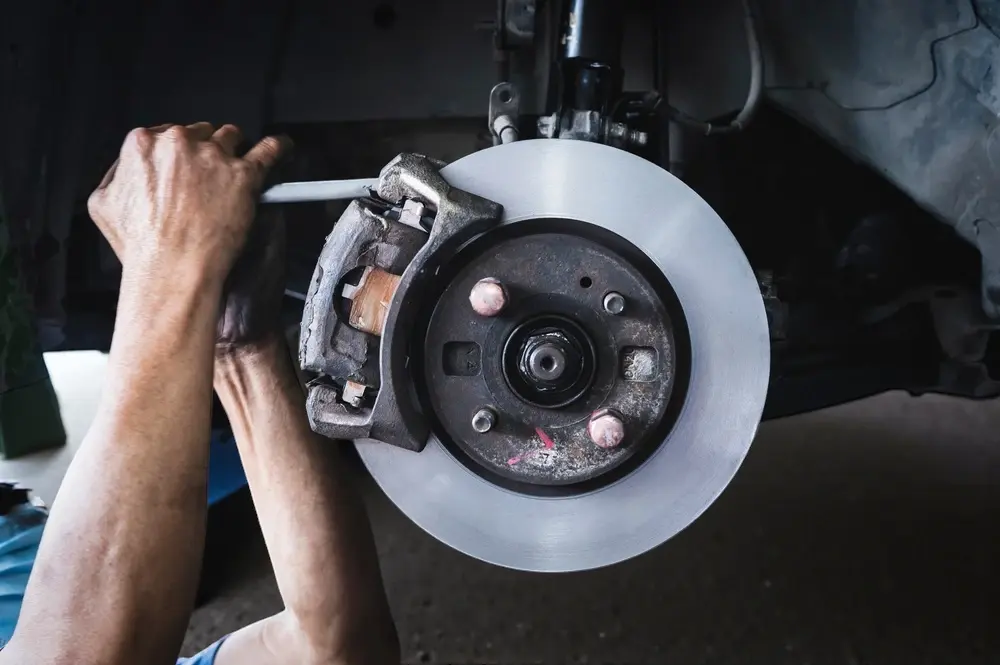
Where do you feel the vibration? That is one of the first useful questions when a driver reports shaking during braking. Movement mainly in the steering wheel points the inspection in a different direction than a pulse through the pedal. A vibration that continues when the brakes are released may not begin in the brake system at all.
The symptom helps set the test order
- Pedal pulsation: measure rotor thickness variation and runout, then inspect the hub and mounting surfaces.
- Steering-wheel shake during braking: inspect the front brakes along with steering, suspension, wheel, and tire condition.
- Pulling while braking: compare brake operation side to side and check caliper movement, hoses, pads, tires, and suspension.
- One wheel much hotter than the others: look for a dragging brake, restricted hose, seized hardware, or bearing problem.
- Grinding, fluid loss, or a sinking pedal: stop driving and have the vehicle inspected immediately.
Squealing alone does not prove that a rotor needs replacement. The noise may come from a pad wear indicator, vibration, glazing, debris, hardware, or the pad material itself. The brakes need to be seen and measured before the repair is chosen.
What people often call a warped rotor
The phrase is commonly used for any brake pulsation. The measurable cause may be lateral runout, uneven rotor thickness, friction material deposited unevenly on the surface, corrosion, or a mounting problem between the rotor and hub. A sticking caliper can create heat and uneven wear that brings the symptom back even after new parts are installed.
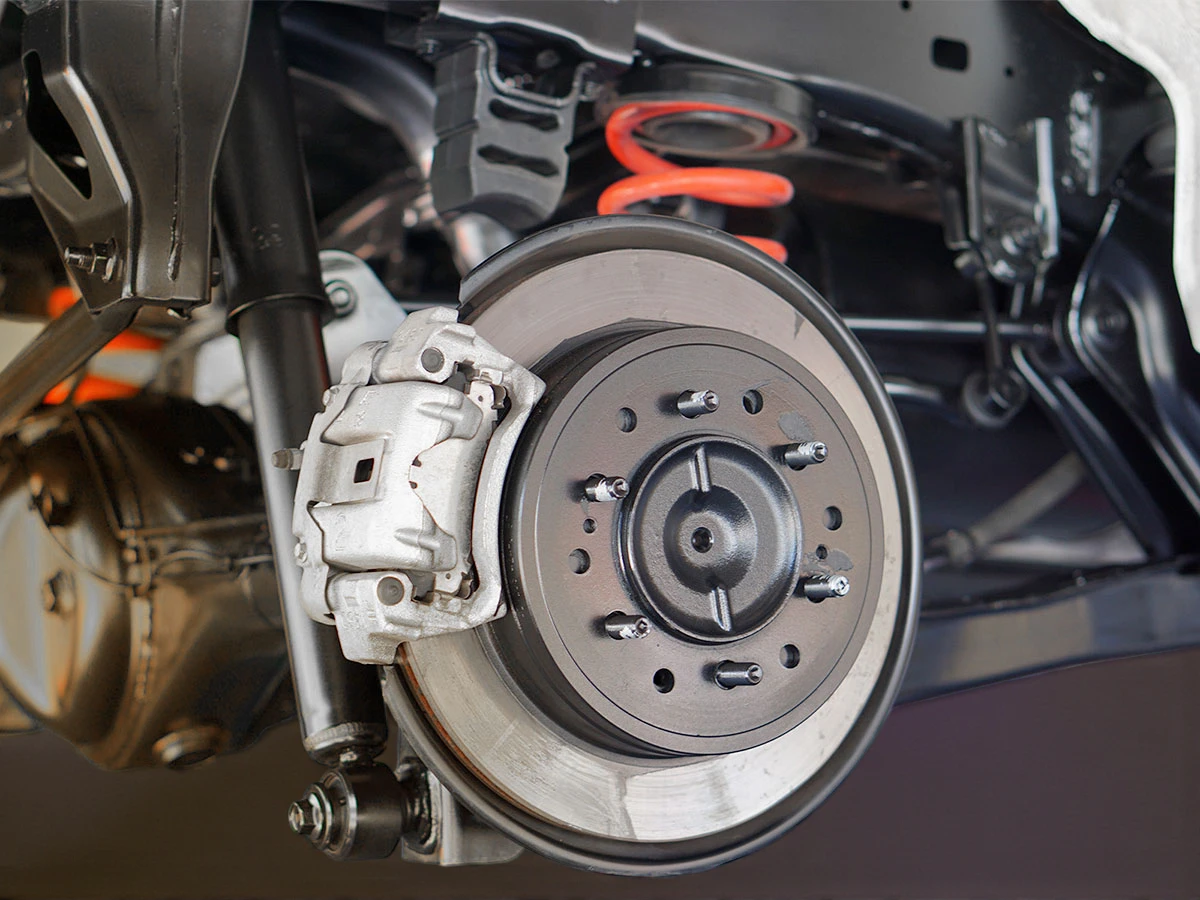
A brake inspection should include rotor thickness and condition, pad wear, caliper and slide movement, hardware, hoses, hub surfaces, and related wheel or suspension play. Rotor measurements must be compared with the manufacturer’s minimum thickness specification. Appearance alone is not enough.
Resurfacing depends on the finished measurement
A rotor can be resurfaced only when its design, condition, remaining material, and manufacturer guidance allow it. The important number is the expected thickness after machining, not before. Cracks, heavy heat checking, deep damage, or severe corrosion can rule it out even when some material remains.
Replacement is often the more sensible choice when machining would leave the rotor close to its discard limit or when a quality replacement provides better value. Either way, the cause of the wear must be corrected. New pads and rotors will not free a sticking caliper or clean corrosion from a hub by themselves.
Brake heat changes the urgency
Tucson traffic, towing, heavy loads, repeated hard stops, and long descents can raise brake temperature quickly. A new burning odor, smoke, reduced braking, or a pedal that suddenly feels different is a reason to stop. Do not continue driving to see whether it cools off and improves.
Tell the shop exactly when the symptom appears and whether tire, suspension, or brake work was recently performed. Vibrance Automotive can reproduce the complaint when safe, measure the system, and explain whether the rotors need machining, replacement, or no work at all.