
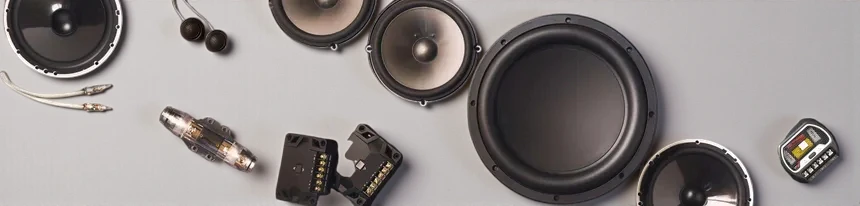
Start with the vehicle, not the logo on the box. A receiver or speaker can be well made and still be the wrong choice if it does not fit, cannot retain an important factory feature, or needs more power than the planned system can provide.
Three decisions come before the brand
What needs to improve? Clearer voices, better balance, stronger bass, more volume, and a modern screen are different goals. Replacing every component is rarely the only way to reach one of them.
What must stay? Steering-wheel controls, factory cameras, warning chimes, microphones, navigation prompts, vehicle settings, and climate controls may pass through the original radio. The required integration equipment can shape the entire build.
How much of the vehicle can change? Cargo space, access to the spare tire, seat travel, service access, airbag zones, and the ability to return the car to stock all matter before an amplifier or enclosure is mounted.
Comparing Pioneer, Kenwood, Alpine, JBL, and others
Pioneer and Kenwood offer broad receiver lineups, but the meaningful comparison is between exact models. Screen behavior, camera inputs, preamp outputs, wireless features, audio processing, and compatible vehicle interfaces can differ within the same brand.
Alpine sells replacement speakers, amplifiers, receivers, and vehicle-specific systems. JBL and other established manufacturers offer useful choices when impedance, sensitivity, mounting depth, power handling, and tonal balance fit the design. Price and reputation deserve consideration, but neither substitutes for matching the components to one another.
Product lines change. A recommendation should be based on the current model and the installation it requires, not a permanent ranking of brand names.
Listen before replacing everything
A damaged speaker is not the only reason a system sounds bad. A loose door panel, poor mounting seal, factory equalization, weak source signal, reversed polarity, or incorrect amplifier setting can produce distortion, thin bass, or an uneven soundstage. Listening to the existing system helps separate an equipment problem from an installation problem.
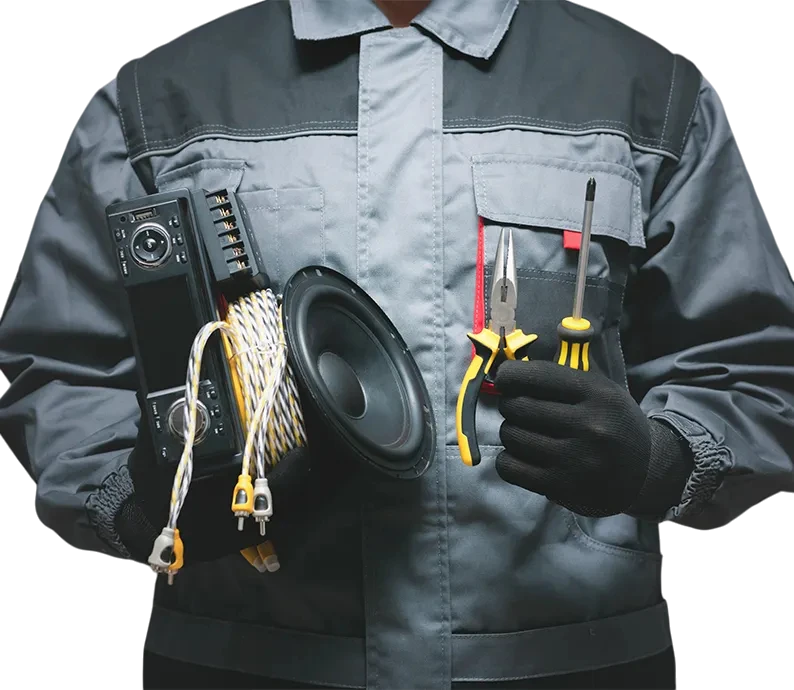
For some cars, front speakers and improved mounting are enough. Another vehicle may need an amplifier or digital signal processor while keeping the factory source unit. A subwoofer can add low-frequency output without asking small door speakers to do work they were not designed to handle.
The work behind the panels matters
Speakers need correct adapters, depth, polarity, and sealing. Amplifiers need suitable cable size, circuit protection close to the power source, a sound ground, ventilation, and wiring routed away from damage. A source unit needs the correct interface to communicate with the vehicle.
Gain is not an extra volume control. Crossovers, level matching, equalization, and time alignment should be set around the equipment and the listening position. Tuning can finish a sound system, but it cannot make unsafe wiring or mismatched components acceptable.
Bring the vehicle, the music or spoken audio you actually listen to, a budget, and a list of factory features that must remain. Vibrance can plan a staged improvement or a complete system without adding parts that do not serve the goal.