
A jump start can get a vehicle moving when the 12-volt battery is discharged, but it does not explain why the battery went dead. It also is not appropriate for every vehicle or every battery condition. Check the owner’s manual first, especially for hybrids, EVs, vehicles with remote jump terminals, or batteries mounted outside the engine compartment.
Do not jump a damaged battery
Stop if the battery is cracked, leaking, swollen, frozen, smoking, or giving off a strong sulfur odor. Keep flames and sparks away. If you cannot identify the correct terminals or safe connection points, call for roadside help.
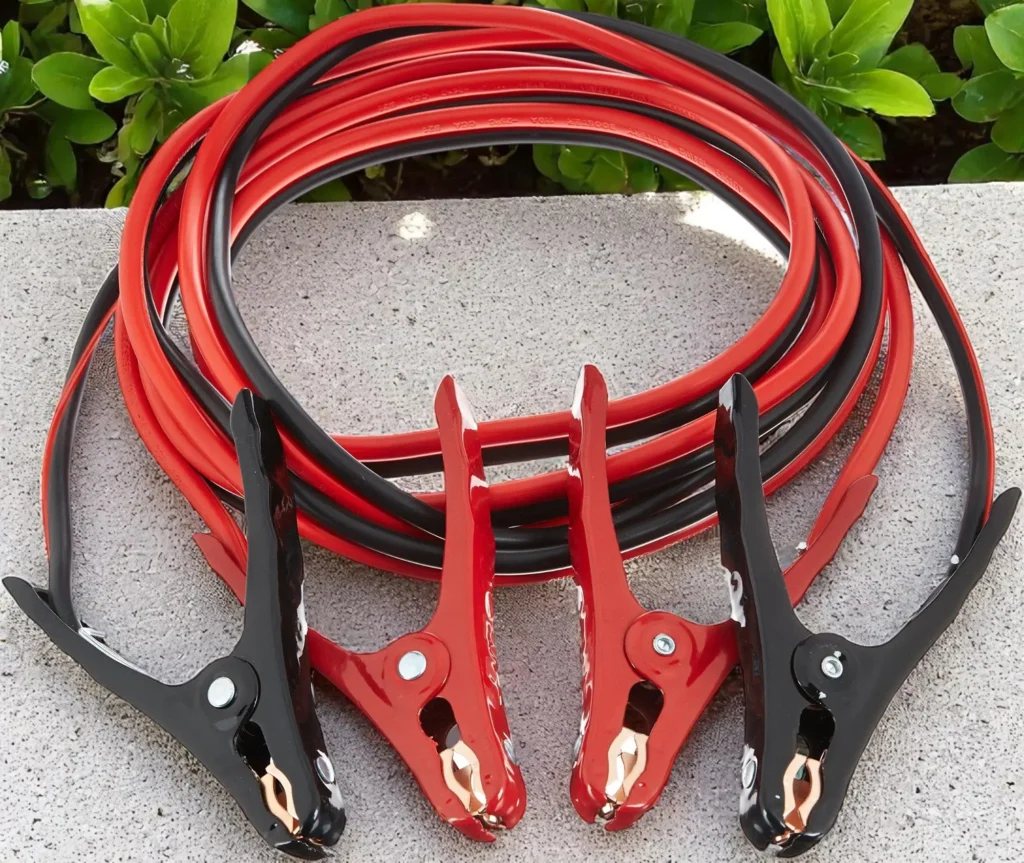
Before connecting cables
- Place both vehicles in park or neutral, apply the parking brakes, and switch off accessories.
- Keep the vehicles from touching.
- Confirm that both use compatible 12-volt electrical systems.
- Locate the positive and negative markings and any manufacturer-designated jump points.
- Keep loose clothing, cables, and hands away from belts and fans.
Typical cable order
Follow the owner’s manual if it differs. For many conventional vehicles:
- Connect the red clamp to the discharged battery’s positive terminal or positive jump post.
- Connect the other red clamp to the donor battery’s positive terminal.
- Connect one black clamp to the donor battery’s negative terminal.
- Connect the final black clamp to the designated ground point on the disabled vehicle, away from the battery.
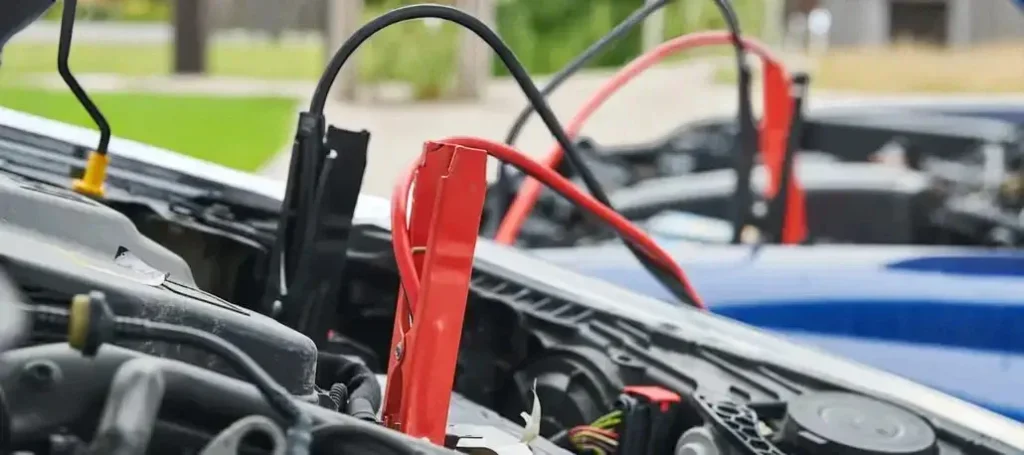
Start the donor vehicle if its manual permits, allow a brief connection period, and then try the disabled vehicle. Do not crank continuously. If it does not start after a small number of attempts, stop; repeated attempts can overheat cables or damage electrical components.
Disconnect safely
Remove the cables in reverse order while preventing the clamps from touching each other or moving parts. A vehicle that starts may still stall again. Driving is not a substitute for testing, and some charging systems cannot safely or fully recharge a deeply discharged battery.
Find out why it died
The cause may be an aging battery, a light left on, a charging-system fault, a loose connection, corrosion, or a parasitic draw. Repeated jump starts are a warning, not normal maintenance.
Learn about battery and charging-system diagnosis or browse our maintenance services.