Not the same upgrade in different sizes
When someone asks whether they need a leveling kit or a lift kit, we back the conversation up a step. Most people assume these are the same upgrade in different sizes: a leveling kit is a small lift, a lift kit is a big leveling job. That assumption is wrong. A leveling kit and a lift kit change different things. Knowing which one you need means understanding what each actually does.
What factory rake actually is
A pickup truck sits higher in the rear than the front from the factory. That tilt, called rake, exists so the truck sits closer to level when carrying a load or pulling a trailer. Without rake, a loaded truck squats, the headlights point at the sky, and the steering gets light at highway speed.
On a truck that never hauls and never tows, factory rake can feel like wasted space. On a truck that works, removing rake without first calculating what happens when the bed is loaded creates problems. The conversation splits right here.
What a leveling kit does
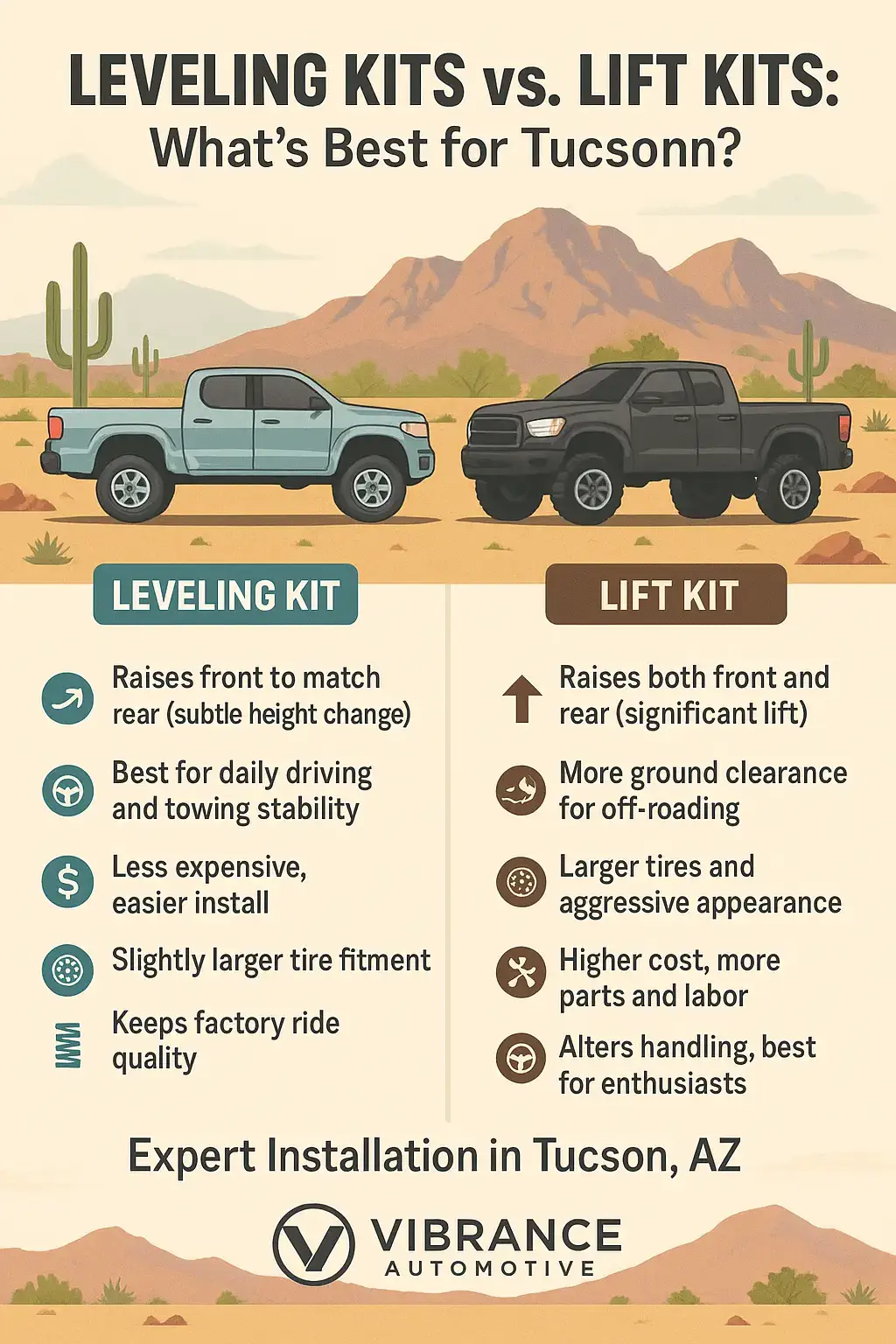
A leveling kit raises the front of the vehicle to bring it closer to the rear ride height. It primarily changes front-to-rear pitch and does not provide the same type of overall height or suspension change as a lift. Exact effects depend on the vehicle and the kit. The change is in the stance.
For some trucks a leveling kit is exactly right. The owner wants a more balanced look, maybe a slightly larger tire, and does not need to clear obstacles or carry heavy loads. Done correctly, a cosmetic level stays cosmetic.
When a leveling kit pushes past what the factory components can support, the job starts overlapping with lift territory and the conversation changes.
What a lift kit does
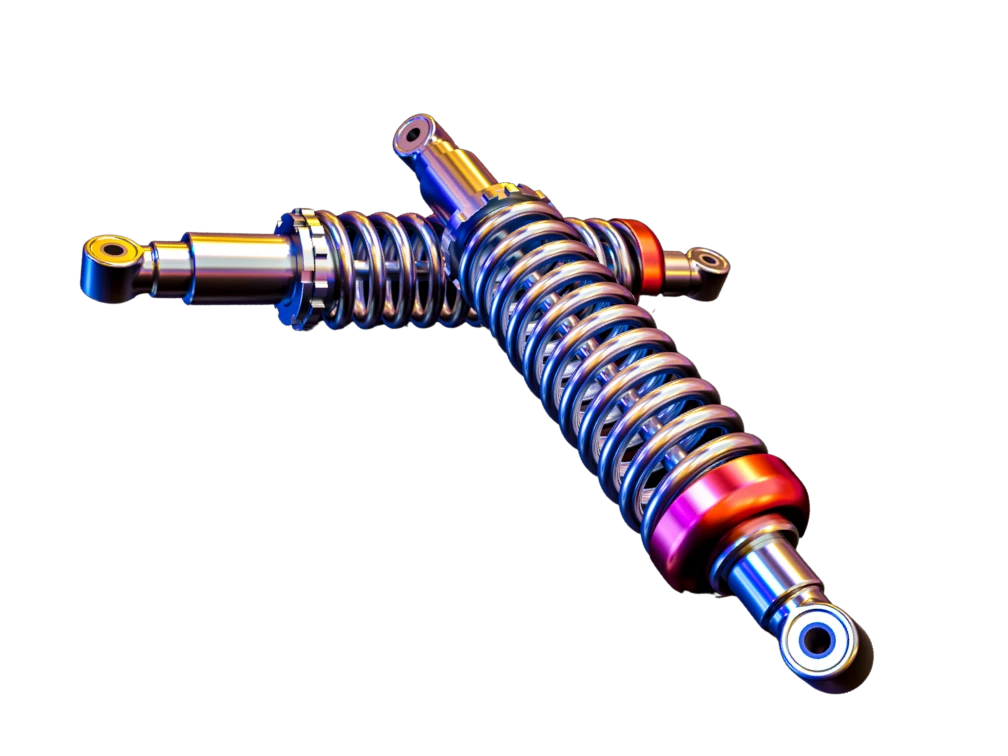
A lift kit adds height and changes suspension components. Depending on the vehicle, a lift can involve new coil springs or leaf springs, longer shocks, replacement control arms, extended brake lines, track bar brackets, sway bar link changes, and driveline angle corrections. The taller the lift, the more the factory geometry changes.
A lift is about clearance: clearing larger tires, off-road obstacles, or equipment mounted underneath a work vehicle. The height serves a function beyond stance, though stance is often why the customer showed up.
Rough Country is our preferred brand for suspension lifts, not the only option and not a universal fit. The right kit depends on vehicle weight, wheelbase, terrain, and whether the truck carries gear or a service body. A trail rig, a weekend dirt-road driver, and a fleet truck needing clearance for a service body all call for different approaches.
The questions that tell you which way to go
Instead of starting with product specs, we start with use. The answers to a few questions usually make the direction obvious.
- Is the goal cosmetic, functional, or both?
- Where will the vehicle be driven most of the time?
- How often and how long will it be used in conditions that need the change?
- What tire size is planned, and is there a specific clearance requirement?
- Does the vehicle tow or carry a payload?
- Why is the change needed now, and what is the actual problem being solved?
There is no shame in an appearance-only priority. Some of the cleanest trucks we work on never leave pavement; the owner wanted a more aggressive stance. When the goal is functional, the questions get more specific.
The spectrum runs the full range. On one end, a weekend driver who wants the truck to look right. On the other, a work truck crossing unimproved roads daily that cannot afford to lose payload or steering stability. We have built lifts for Pima County government off-road service vehicles where the work served a functional requirement, not an aesthetic one.
What else has to be considered
Whatever direction the conversation goes, a few physical constraints do not change. Wheel-well clearance is not the same as fender clearance. A tire that clears the fender lip at rest will not necessarily clear the inner liner, the pinch weld, or the bumper bracket at full compression with the wheels turned. Clearance must be checked throughout suspension and steering movement.
Shock requirements must be calculated for the actual kit, vehicle, geometry, and use. The right shock length and valving for one configuration can be the wrong part for another.
Tire clearance, alignment, suspension geometry, and supporting components all sit downstream of these decisions. For a deeper look at the planning that goes into a complete lift setup, see our custom lift kit service page.
One answer does not fit every truck
Neither option is inherently better. The correct one matches the vehicle configuration, the use case, and the supporting work required. Towing, hauling, payload, tire size, and driving conditions all factor in before anyone picks a kit. Vibrance is a full-service shop that handles the supporting work the selected configuration requires, from alignment and tire mounting to shock replacement. The goal is a truck that drives correctly, not one that looks the part and handles worse than stock.
If you have been trying to sort out whether a leveling kit or a lift kit makes sense for your truck, call 520-261-3533 or schedule an appointment online. We will walk through the questions that point toward the right direction, starting with how you actually use the vehicle.