
Hot pavement does not cause every tire failure, but heat increases the stress on tires that are underinflated, overloaded, aged, damaged, or already separating internally. A five-minute check before a highway trip can reveal problems that are easy to miss from the driver’s seat.
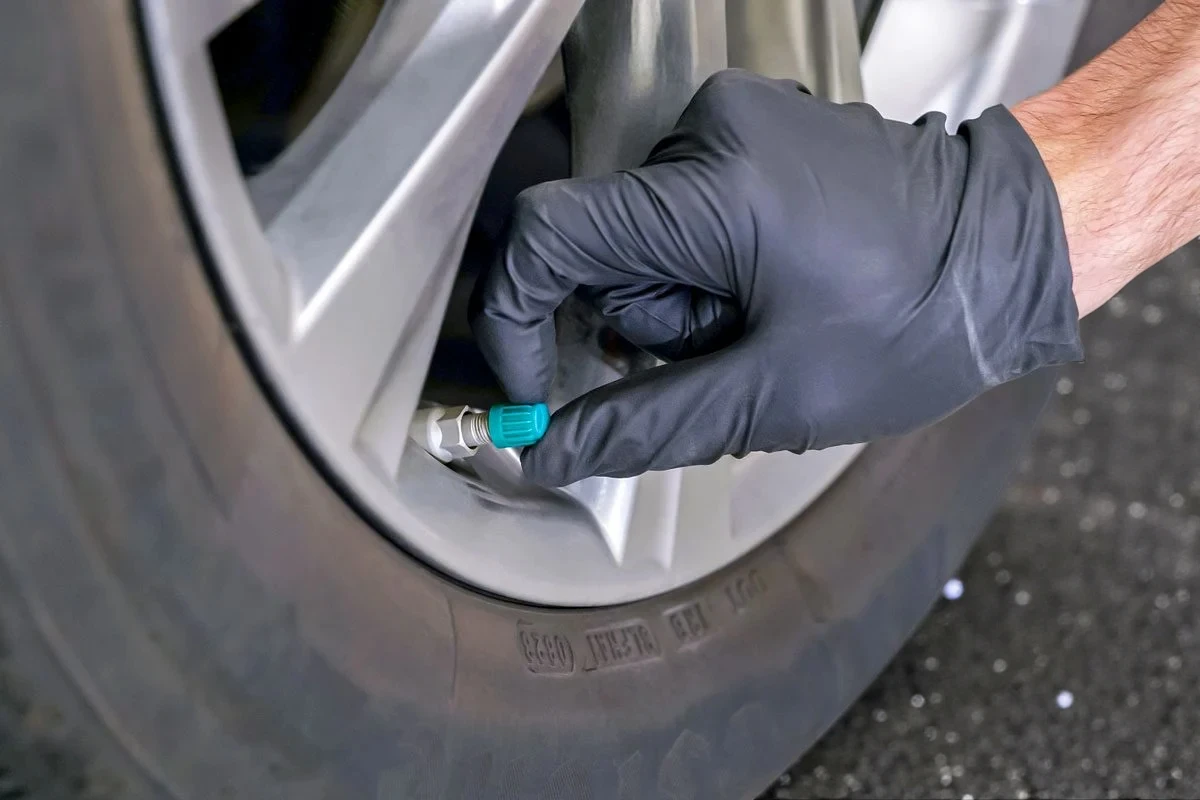
Check pressure when the tires are cold
Use the pressure listed on the driver-door placard or owner’s manual. Do not inflate to the maximum pressure molded into the tire sidewall. Check before driving or after the vehicle has been parked long enough for the tires to cool.
Pressure changes with ambient temperature, and a slow leak may look like ordinary seasonal variation at first. If one tire repeatedly loses more pressure than the others, have it inspected for a puncture, valve leak, wheel damage, or bead-sealing problem.
Look beyond tread depth
- Bulges, bubbles, cuts, or exposed cords
- Cracks around the sidewall or between tread blocks
- Uneven wear on one shoulder or across the tread
- Vibration that appears at a particular speed
- A tire that is much older than the others
- Damage after striking a curb or pothole
A bulge or exposed cord means the tire should not remain in service. Tire age matters because rubber and internal bonding can deteriorate even when tread remains. The date code helps identify age, but condition and manufacturer guidance should be considered together.
Monsoon rain changes the risk
Dry roads can hide marginal tread. During heavy rain, worn tires have less ability to move water away from the contact patch. Slow down, increase following distance, avoid standing water when possible, and do not use cruise control when traction is uncertain.
Rotation, balance, and alignment
Rotation patterns and intervals depend on drivetrain, tire type, directional construction, staggered sizing, and manufacturer guidance. Balancing can address vibration caused by weight distribution, but it cannot repair a bent wheel or damaged tire. Alignment can reduce certain wear patterns only after loose or worn steering and suspension parts are corrected.
Do not forget the spare
Check the spare tire’s pressure, age, condition, and accessibility. Confirm that the jack, lug wrench, wheel-lock key, and inflator or sealant kit are present. Temporary spares have speed and distance limits printed on the tire or described in the manual.
Before a summer trip
Inspect the tires cold, adjust pressure, check the tread and sidewalls, verify the spare equipment, and confirm the vehicle is not loaded beyond its rating. If a vibration, pull, or pressure warning persists, have it inspected before highway driving.
See our tire and wheel services, repair services, and maintenance services, or contact the shop.