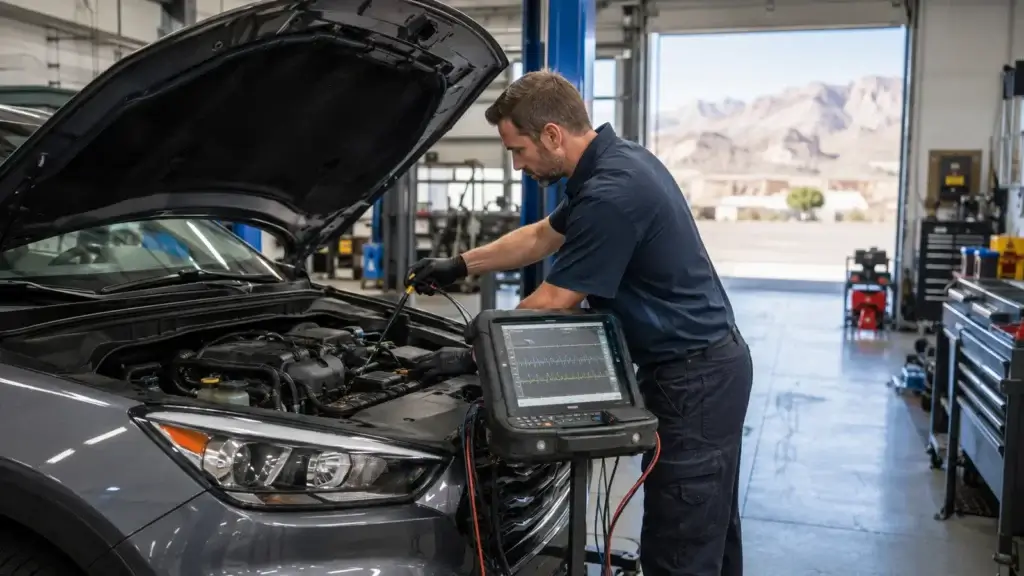
An engine replacement estimate should come with more than a fault code and a price. It should come with test results that show what failed inside the engine and why a smaller repair will not solve the problem.
This matters because serious symptoms overlap. A rough-running engine, loss of power, smoke, coolant loss, or a misfire can point toward internal damage. The same complaint can also begin with ignition, fuel delivery, wiring, an air leak, a sensor input, or mechanical timing. The symptom tells the technician where to start. It does not prove the final repair.
Ask what the test actually proved
A misfire code identifies where the computer detected a misfire. It does not identify the failed part. Compression and leak-down results can provide evidence about cylinder sealing. Cooling-system pressure testing can help locate coolant loss. Electrical measurements can separate a wiring or control problem from a mechanical one. Which tests are appropriate depends on the complaint and what the first checks reveal.
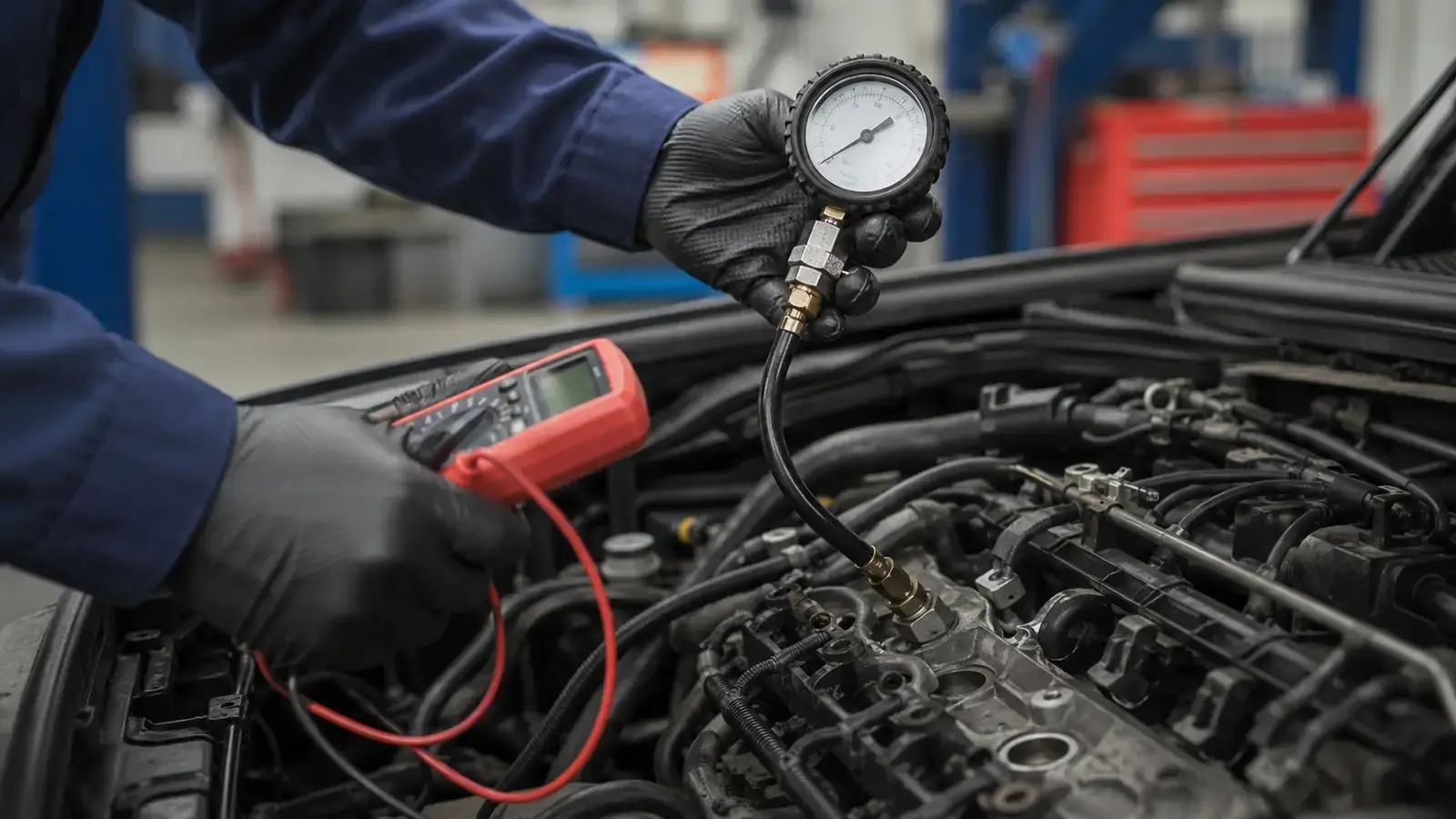
If a shop recommends major engine work, ask for the failed measurement, the specification it was compared with, and the connection between that result and the proposed repair. A useful explanation should make sense without requiring you to diagnose the car yourself.
Give the second shop the evidence
Bring the written estimate, diagnostic notes, fault codes, and service history you already have. Leave stored codes and warning lights intact when possible. Clearing them can erase freeze-frame information showing engine temperature, speed, load, and other conditions present when the fault occurred.
Describe the behavior in plain terms. Note whether it happens cold or hot, at idle or under acceleration, every trip or only occasionally. Mention recent repairs and whether fluid levels have changed. Those details help build a test plan without steering the technician toward an unsupported conclusion.
A second opinion can still confirm the first one
Sometimes the second diagnosis reaches the same answer. That is not wasted effort when the repair is expensive. You now have two evaluations and a clearer basis for deciding between repair, replacement, or another option. If the results point somewhere else, you may avoid replacing an engine that was not the cause.
Vibrance Automotive provides engine diagnosis and repair in Tucson. We explain the evidence, the repair choices, and what may happen if the work waits. You can call the shop or request an appointment. We also test electrical and charging faults that can create misleading drivability symptoms.