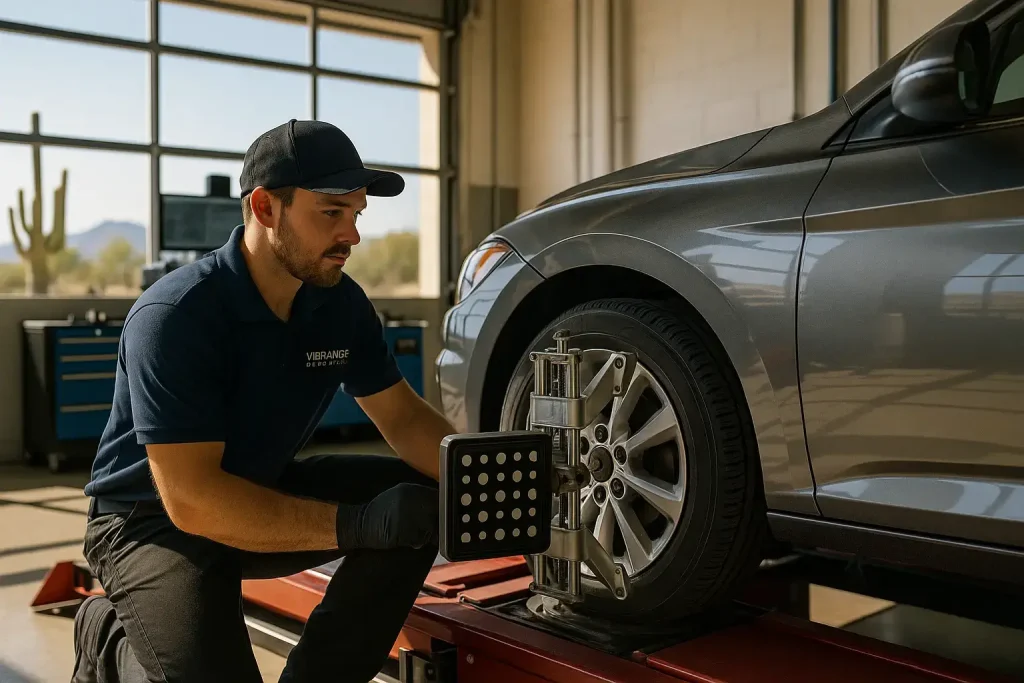
A wheel alignment adjusts the angles that determine how the tires point and contact the road. It can correct a crooked steering wheel, poor tracking, and certain tire-wear patterns, but only when the tires, wheels, steering, and suspension are mechanically sound.
Vibrance Automotive provides steering inspection and wheel alignment in Tucson. We check for the problems that can prevent an alignment from holding before treating adjustment as the entire repair.
Schedule an alignment inspection or call (520) 261-3533.
Signs the Vehicle May Need an Alignment
- The steering wheel sits off-center while driving straight
- The vehicle pulls or drifts consistently
- Inside or outside tire edges wear faster than the rest
- The vehicle feels unstable after a pothole or curb impact
- Steering behavior changed after suspension or tire work
- A lift, lowering kit, control arm, tie rod, strut, or other geometry-related part was installed
Road crown, unequal tire pressure, tire construction, brake drag, and worn components can mimic an alignment problem. We do not assume every pull can be fixed by changing toe.
What Camber, Caster, and Toe Mean
Camber describes the inward or outward tilt of the wheel when viewed from the front. Caster describes the steering-axis angle that affects stability and steering return. Toe describes whether the fronts of paired wheels point toward or away from each other.
The correct targets come from vehicle specifications and, when appropriate, the way a modified vehicle is used. More adjustment is not automatically better, and not every angle is adjustable from the factory.
What We Check Before Adjustment
An alignment rack measures angles; it does not repair looseness. Before adjustment, relevant conditions may include:
- Tire pressure, size, wear, and obvious damage
- Wheel condition and hub fit
- Tie rods, ball joints, control arms, and bushings
- Wheel bearings and steering linkage
- Ride height, springs, shocks, and struts
- Evidence of bent or shifted components
If a joint or bushing allows the wheel to move, the alignment reading can change as soon as the vehicle returns to the road. We explain required mechanical repairs before promising an adjustment will solve the complaint.
Steering Problems That Are Not Alignment
Free play, binding, noise, vibration, and intermittent loss of assist may involve steering components, power-steering hydraulics, electric-assist systems, tires, wheel balance, or suspension wear. A shaking steering wheel at a certain speed is often a balance or tire issue rather than an alignment angle.
For clunks, bouncing, or loose suspension symptoms, see our suspension repair page.
Alignment After Suspension Changes
Control-arm replacement, tie-rod work, strut replacement, ride-height changes, lift kits, and some steering repairs can alter alignment. Modified vehicles may need additional components to achieve acceptable geometry.
If you are planning a lift, wheel, and tire package, fitment should be considered before the alignment appointment. See our lift-kit and tire and custom-rim pages.
Tucson Roads and Alignment
Potholes, curb strikes, rough roads, and off-pavement use can shift or damage components. Normal wear can also allow angles to change gradually. The road condition explains why an inspection may be useful; it does not replace measuring the vehicle and checking its parts.
Protecting Tire Life
Correct alignment helps tires wear evenly when pressure, balance, rotation, and suspension condition are also correct. Alignment cannot restore tread already worn away. Addressing the cause early gives the remaining tire the best chance of wearing normally.
Schedule Steering and Wheel Alignment in Tucson
If the vehicle pulls, the wheel is crooked, or the tires are wearing unevenly, start with an inspection and measurements. Book an appointment online or contact Vibrance Automotive.