
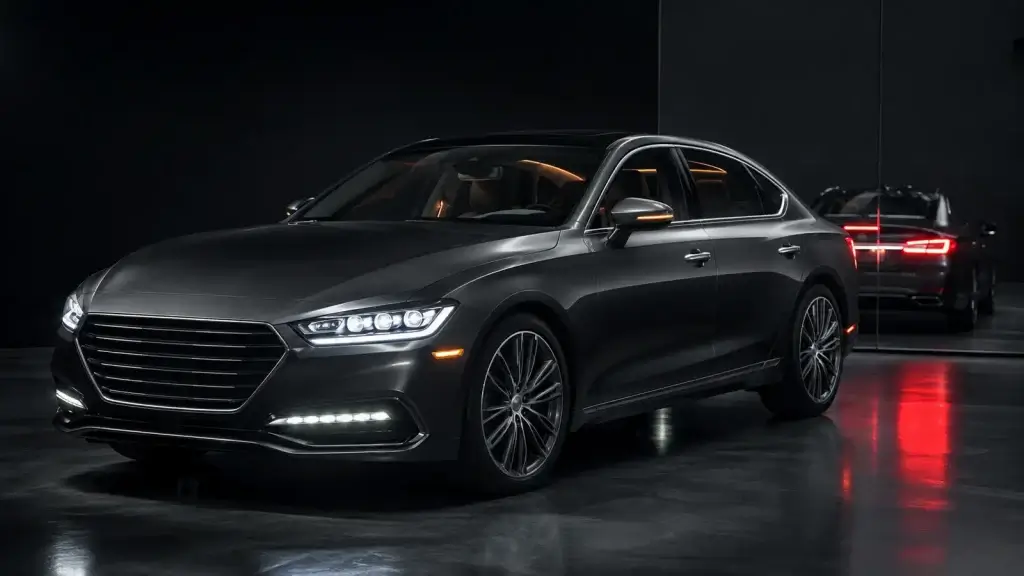
LEDs changed vehicle lighting because they are compact, fast, efficient, and individually controllable. A modern vehicle may use hundreds of emitters across exterior and interior systems, often controlled by software rather than a simple switch and fuse.
Headlights and daytime running lights
LED headlamps can use separate emitters for low beam, high beam, shoulder light, and adaptive segments. Daytime running lights are often integrated into the assembly and may also serve as turn signals. A failed light bar can require diagnosis of the driver or assembly even when the main headlight still works.
Brake lamps and turn signals
LEDs reach full brightness faster than incandescent bulbs, giving following drivers a slightly earlier warning. Multiple segments also let designers create sequential turn signals and distinctive patterns. The vehicle may monitor each circuit and store faults when expected current or module communication is missing.
Interior and convenience lighting
LEDs illuminate instruments, switches, footwells, cargo areas, door handles, and ambient trim. Brightness and color may be controlled through the body-control network. A lighting complaint can therefore involve a door module, dimming command, configuration setting, or communication fault rather than the lamp alone.
Cameras and sensors depend on lighting
Automatic high beams use a forward camera. Automatic headlights use ambient-light information. Adaptive systems add steering, speed, and ride-height data. This integration improves safety but means collision, glass, suspension, and electrical repairs can affect lighting behavior.
Why warning messages appear
Older vehicles inferred bulb failure from current draw. Newer ones may receive status directly from a lamp module. Aftermarket components can create warnings when their electrical behavior differs from the factory design. Installing resistors may suppress a message while adding heat and leaving the actual compatibility issue unresolved.
Repair considerations
- Scan all related modules, not just the engine computer.
- Verify charging voltage, grounds, and connector condition.
- Inspect for water intrusion before replacing electronics.
- Confirm part numbers and left/right configuration.
- Program or code modules when the service procedure requires it.
- Aim and calibrate the system after installation.
Modern lighting is part of the vehicle’s electrical and safety architecture. Treating it as a system produces a more reliable repair than swapping parts until the warning disappears.
Need help with a lighting or electrical problem?
Flickering lamps, warning messages, uneven beams, moisture inside a housing, and repeated bulb failures often need diagnosis before parts are replaced. Vibrance Automotive can inspect the circuit, charging voltage, grounds, modules, housings, and beam aim.
Schedule an inspection or call the shop for availability.