
When the steering wheel has a mind of its own
A customer will sometimes describe the feeling as the car wanders, or it pulls when they hit a bump. Another person calls it a vibration that comes through the wheel at highway speeds but settles down around town. From the driver’s seat, the two complaints feel different, but under the vehicle they can trace back to similar parts of the front-end system.
Wandering or vibration does not automatically mean a control arm has failed. Ball joints, tie rods, wheel bearings, sway bar links, shocks, and even tire condition can produce symptoms a driver interprets as steering looseness or a shimmy. The control arm bushings themselves may be worn without the arm needing replacement, and a tie rod end with too much free play can cause a wander that feels identical to a failing control arm. At Vibrance, the first step is putting the vehicle where the parts are visible and looking before deciding.
What a control arm does and why looseness matters
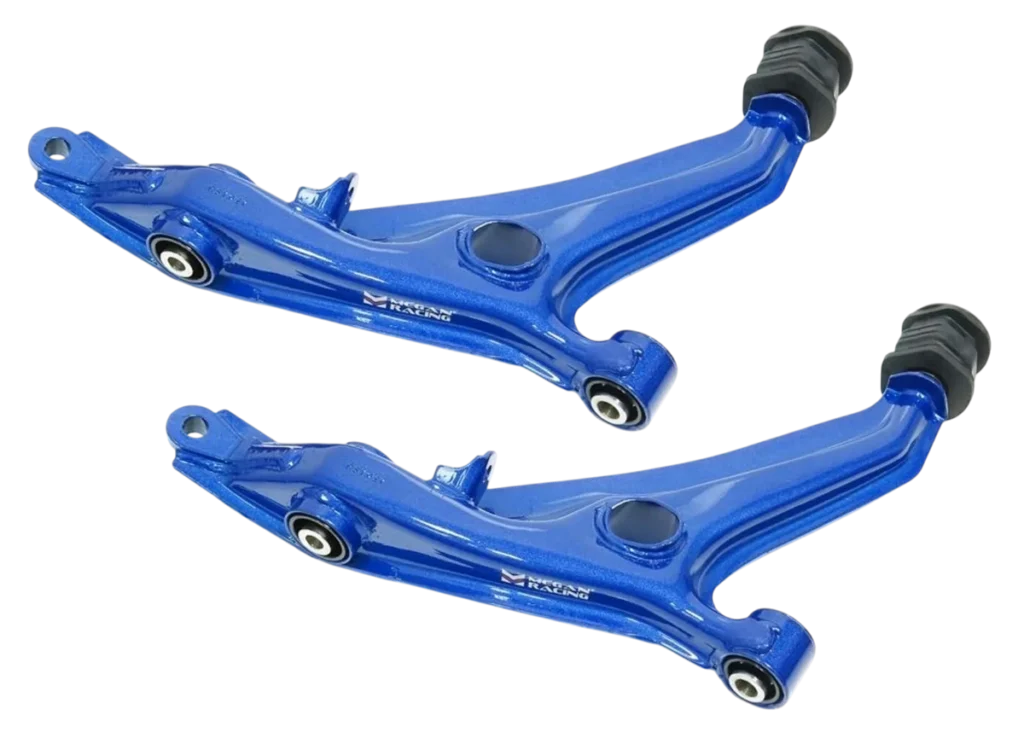
The control arm connects the steering knuckle or spindle to the vehicle frame. As the suspension moves through its travel, the arm pivots at its bushings while the ball joint allows the knuckle to turn and tilt. When the bushings compress and return predictably, the alignment angles the technician set stay where they belong. When a bushing tears, separates from its sleeve, or hardens beyond its working range, movement that should not exist enters the system.
That unwanted movement compounds every time the wheel hits a bump, a pothole, or an uneven expansion joint. Within a short drive after an alignment, the geometry shifts. The driver feels the same pull or wander they felt before the alignment, because nobody corrected what was causing the movement. The alignment held the numbers on a screen, but it could not hold the vehicle on the road.
Inspecting the front end with the vehicle lifted
When the vehicle is raised on a lift, every component that contributes to steering and suspension geometry becomes accessible. Vibrance uses a flashlight and, in tighter areas where a bushing or mount sits behind a subframe brace or splash shield, an inspection scope to look for cracks, separation, and deformation that would be invisible during a ground-level walk-around.
The inspection examines the full steering and suspension system: tie rods, ball joints, bushings, control arms, wheel bearings, sway bar links, shocks or struts, tires, and related mounting points. Each is checked for wear, looseness, or damage that would let unwanted movement into the geometry.
The purpose of this process is to identify what is actually causing the movement a driver feels, not to replace parts based on a symptom checklist. A loose tie rod, a worn strut mount, and a torn control arm bushing can each send a similar sensation through the steering wheel. The inspection sorts one from the others.
Why alignment is not a stand-in for repair
An alignment adjusts angles. It cannot remove the clearance in a worn ball joint, tighten a bushing that has separated from its metal sleeve, or restore the clamping force a tie rod needs to keep the wheels at the set angles. When a shop performs an alignment on a front end that has mechanical looseness, the numbers on the alignment display may read correctly for a moment. Once the vehicle leaves the rack and the suspension cycles through normal travel, the loose component allows the angles to drift.
The result is a cycle. The vehicle gets aligned and may feel steadier for only a few miles, and then the pull or wander returns. The cycle repeats until the worn component is identified and corrected. Vibrance treats alignment as the finishing step after the mechanical cause has been resolved, not as the primary answer to a movement-based complaint.
What gets replaced and what does not
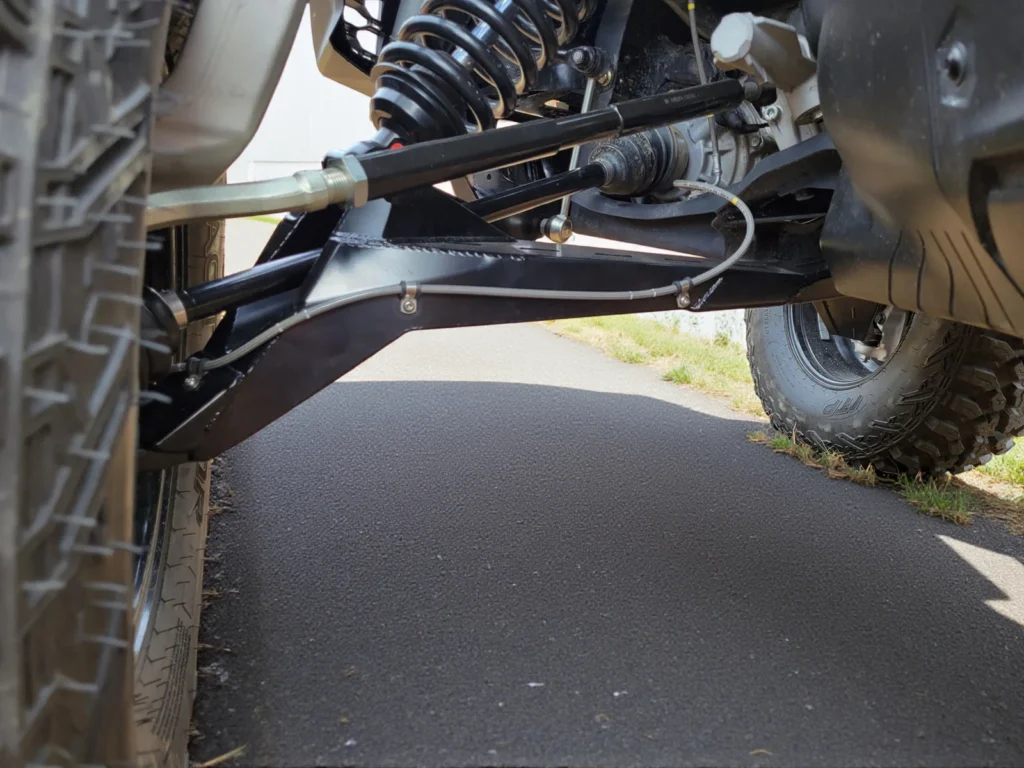
Once the inspection is complete, the decision about replacement follows what was found. A control arm may need replacement when the bushing has torn beyond what a press-in replacement can address, when the arm itself shows deformation from an impact, or when the integral ball joint on a sealed assembly has exceeded its wear limit. In some cases a bushing alone can be serviced, and in others the entire arm assembly is the correct repair.
Tie rods, ball joints, and sway bar links are evaluated individually. Replacing a control arm does not automatically mean replacing adjacent parts unless those parts show measurable wear. The inspection determines what needs attention, and the repair is limited to what was found.
Related front-end services
Because control arm problems sit at the intersection of steering and suspension, a diagnosis often touches on systems covered in more detail elsewhere. For a broader explanation of what the suspension shop evaluates during routine and complaint-based inspections, see the suspension services page. For the alignment process that follows mechanical repair, see the steering and alignment page.
When to stop driving
Most front-end wear develops gradually enough that a driver notices the change before it becomes dangerous. There are times when the progression moves faster. If the steering wheel becomes difficult to keep centered, a wheel feels loose or unresponsive during a lane change, or a loud clunk is accompanied by a sudden change in how the vehicle tracks, the safest response is to pull over when it is safe and arrange a tow. Continuing to drive on a front end that has lost its ability to hold geometry puts the driver and everyone around them at risk.
Have your front end inspected in Tucson
If you are dealing with wandering, vibration, or a pull that alignment did not correct, Vibrance can put the vehicle on a lift and work through the inspection step by step. The focus stays on finding the mechanical cause, not on masking it.