“Rough ride” can mean several different things. Some drivers feel a bounce after every dip. Others notice a shake at 45 mph, a steering wheel that wanders, or a hard hit over small bumps. Tell us exactly when you feel it. That detail is often more useful than the word “rough.”
What to notice before the appointment
- Only at one road speed: tire balance, a bent wheel, tire damage, or another rotating part may be involved.
- Mostly over bumps: shocks, struts, bushings, ball joints, mounts, or loose suspension parts need a closer look.
- While braking: brake variation, wheel and tire problems, or movement in the suspension can create a shake.
- During acceleration: mounts, axles, tires, and driveline parts move higher on the list.
- All the time: tire pressure, tire damage, alignment, or widespread suspension wear may be contributing.
Start with the tires
Check the pressure when the tires are cold and use the number on the vehicle placard. The maximum printed on the tire is not the target pressure for the vehicle.
Look for bulges, cuts, cracks, uneven tread, separated areas, missing wheel weights, and debris packed inside a wheel. A tire can still have tread and be unsafe because of age or internal damage. If the vibration changes after a tire rotation, tell us. That is a useful clue.
Why we do not start by selling shocks
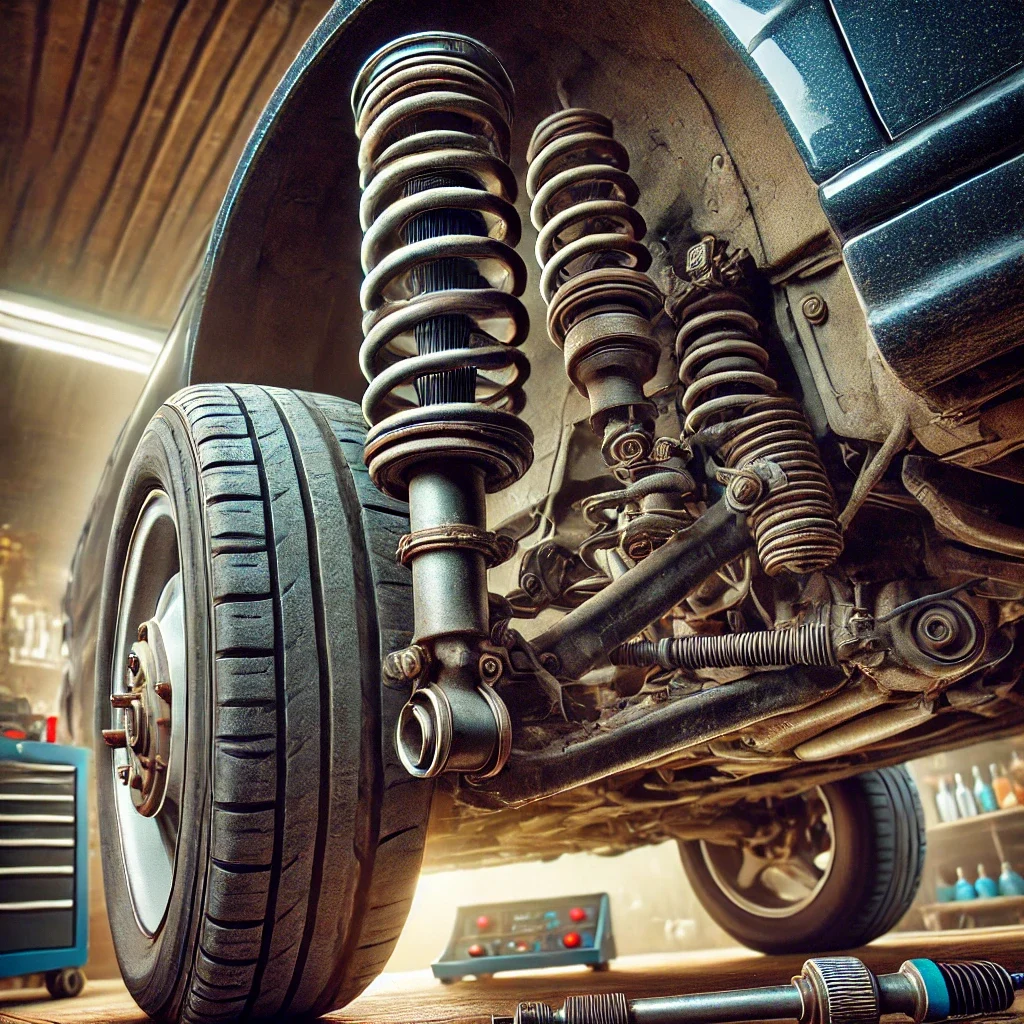
Shocks and struts control body movement, but they are only part of the system. Bushings, ball joints, tie rods, control arms, wheel bearings, springs, tires, and mounting points can all change how a vehicle rides. Replacing shocks before confirming the source can leave the original complaint untouched.
For related work, see our suspension and steering service and wheel alignment service.
When to stop driving
Arrange a tow if a tire is bulging or separating, a wheel is loose, steering control changes suddenly, the vehicle pulls violently, a suspension part is dragging, or the vibration is strong enough to affect control. A new severe symptom after a pothole strike or collision also deserves immediate attention.
What we check at Vibrance
If the vehicle is safe to drive and the symptom requires it, we begin with a road test. We then inspect the tires, wheels, steering, suspension, brakes, mounts, and driveline parts connected to the complaint. Alignment measurements can help, but an alignment cannot tighten a loose joint or repair a damaged tire.
Write down the speed, road condition, and driving action that make the symptom appear. If it happens only after the car warms up or only while braking or accelerating, include that too.